
TypeScript Patterns I Use Every Day
Practical TypeScript patterns that have made my code more robust and my team more productive. No academic exercises—just battle-tested approaches.
TypeScript has transformed how I write JavaScript. But the real value isn't in the type system itself—it's in the patterns it enables. Here are the ones I reach for constantly.
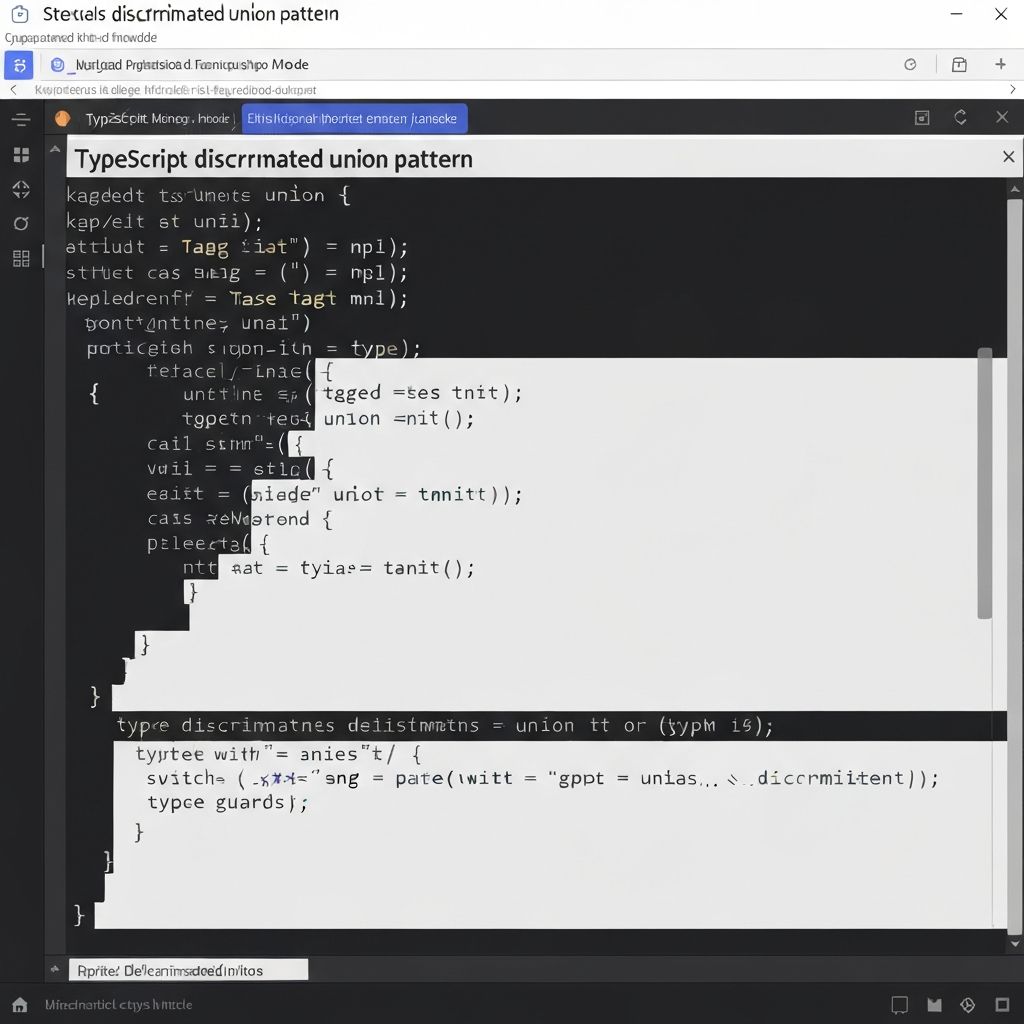
Discriminated Unions for State
Instead of nullable fields and boolean flags, use discriminated unions. They make impossible states unrepresentable.
Instead of { data?: T; error?: Error; loading: boolean }, use { status: 'idle' } | { status: 'loading' } | { status: 'success'; data: T } | { status: 'error'; error: Error }.
Branded Types for IDs
Prevent mixing up user IDs with post IDs by branding your types. It's a compile-time safeguard that costs nothing at runtime.
Const Assertions for Constants
Use as const to get literal types instead of widened types. Your constants become self-documenting and type-safe.
Utility Types I Use Constantly
PickandOmitfor reshaping typesPartialandRequiredfor optional fieldsRecordfor typed dictionariesReturnTypefor inferring function returns
"The best TypeScript code doesn't fight the type system—it leverages it."
The Meta-Lesson
Let the compiler catch bugs. Encode business rules in types. Make the pit of success as wide as possible.
Topics: